
Making Time Work for You: Methods
This is part two of a two part series on time management! We recommend that you take a look at the first part of this series, posted last week, to understand why time management is so important for your well being!
Please note: As an Amazon Affiliate, My Academic Family will earn a commission on any purchase made through the Amazon links found in our blog posts.
We’ve found a few methods of time management that might prove useful, both in studying and general organisation!
One method of organising your time requires you to measure both the ‘importance’ of your task (in relation to an overall goal that you have set), and the ‘urgency’ of the task (when it is due and the pressure to get it done).
It can be helpful to set aside a block of time at the end of your day to do anything that is ‘urgent’. This can help you focus on the important tasks (like researching for an essay due later in the month), but still get the urgent ones done (like posting to a discussion board for your class tomorrow). By putting this block of urgent tasks at the end of your working day, you can fully focus on the important tasks without the urgent tasks swinging over your head, as you know that there is an assigned time to get them done. It can also stop you from getting distracted in the middle of your important tasks to quickly reply to that email that just came in, or do that five minute quiz that’s due tomorrow.
This can also be linked to the idea of ‘batching’ your tasks together - or putting all of the small, similar tasks together and getting them done at the same time. This is easier for your brain to process, because your brain often struggles to switch between tasks efficiently.
A similar way to organise your to-do list is using the ABCDE Method. This is useful in deciding which of the tasks on your list to start with if you’re getting overwhelmed by everything on your plate. (Note: We are well aware that delegation isn’t really an option for most uni students - just ignore this option and try to use the rest of the framework!)
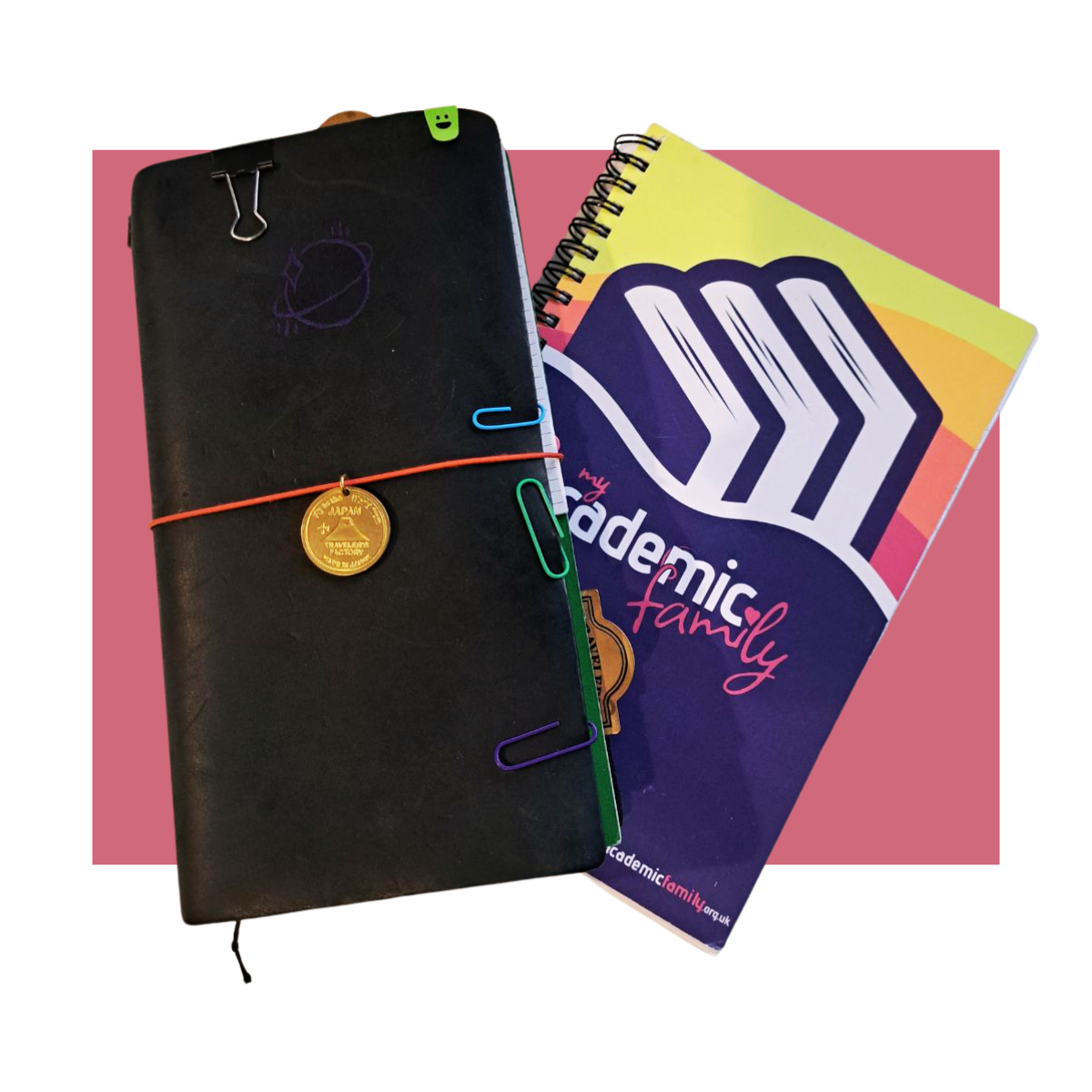
Bullet journals can look however you want, and can use whatever notebook you have on hand - we recommend our My Academic Family notebooks - available now!
If you feel like your entire organisational system is in need of an overhaul, then it might be time to look into Bullet Journaling. This is a journaling system that helps you ‘track the past, organise the present, and plan for the future’ - according to Ryder Carroll, the creator of the method. An explanation of the system itself is available on the Bullet Journal YouTube channel. If you prefer to read your explanations, there are plenty of guides, but we believe this one, by The Lazy Genius Collective, is the easiest to understand.
While bullet journaling has become an artistic expression for some people, most notably those who post their perfectly handwritten and beautifully organised journals online, it can also be simple and utilitarian. This system is incredibly adaptable, so if you want to sort your tasks by weeks instead of days (if your days aren’t too structured) don’t worry about it!
Your journal is meant to serve you!
When it comes to organising your study-time specifically, there are many practical methods, but one of the most well known is the Pomodoro Technique (sometimes referred to as the Pomodoro Method).
This is done by choosing a single task that you want to focus on, and setting a timer (often for 25 minutes). Work continuously for those 25 minutes, then take a 5 minute break to do something productive, like eating a quick snack, or something mindful - like listing off things that you are looking forward to. Go back to your work for another 25 minute block and repeat (usually for 4 rounds, or around 2 hours). After that take a longer 30 minute break. Once your 30 minute break is over, you can start the process over again. You might need to build up to 25 minute focus sessions, so feel free to start with shorter sessions if you need to.
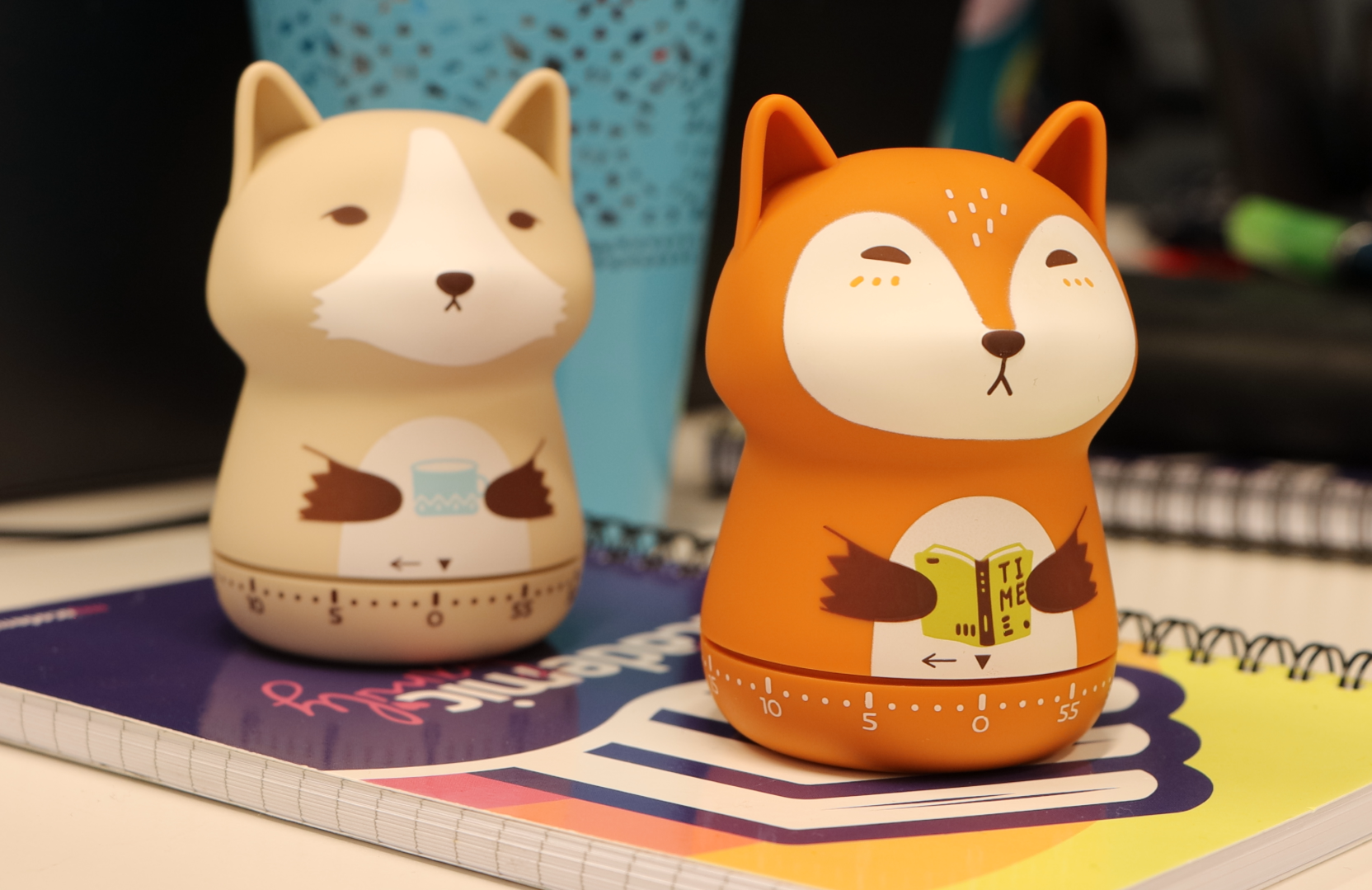
These cute fox timers are the ones that we used to demonstrate the Pomodoro Technique!
This method has proven to be useful for all different kinds of students, but especially those who struggle with staying focused, such as people with ADHD.
There are many different timers that you can use, from the one on your phone to an actual kitchen timer (which this method was created using), but it should be one that will let you know when your time is done so you don’t have to keep checking and disrupting your focus. We have found Pomofocus to be very useful, as it has a built in to-do list feature and you can really get to grips with how long a task is going to take.
We have a video on our YouTube channel, where you can study alongside us using this technique.
We’ve covered how to organise your time when you’re busy, but what about all the time in-between those tasks? There’s always going to be time where you’re waiting around for the next part of your day to start, especially with how university timetables tend to be structured.
If you feel like you don’t know how to use your ‘in-between’ time well, it can be helpful to put together a list of things that you want to do, or that would be good for you to do, so that you have something that feels fulfilling to do in that chunk of time between lectures, which isn’t quite long enough to go home or study in, but too long to just sit around on your phone. This list can include things like messaging a friend you’ve been meaning to catch up with, taking a walk, engaging with your religion if you follow one, or simply being bored - we promise that it’s good for you!
We’ve put together a list of suggestions below if you’re interested, but remember, not everything that makes one person feel fulfilled, will make you feel fulfilled! Change and tailor your list to best fit your needs. The only real recommendation we have is to keep social media, or replying to emails (or any other work-related task) off the list!
It’s a good idea to come up with ideas that fit your own life. For example when our colleague Anne is stuck somewhere with ten minutes to spare and nothing to do, she likes to take pictures of weird or interesting things that she can see. It’s an easy way to remind yourself that even the least interesting places still have something to offer.
Spending these little chunks of time doing something that feels fulfilling instead of scrolling on social media can be really good at making you feel time-rich and less like you’ve not had any time to yourself all day!
Message a friend that you’ve been meaning to catch up with
Phone a family member that you know is free right now
Read a chapter of a book that you’re reading for pleasure
Take a walk
Listen to some new music
Draw a picture (even if it’s bad)
Engage with your religion (if you follow one)
Stare out the window and let your mind wander
Be bored (it’s healthy)
Take photos of things you find interesting in the area around you.
Write down a few things you’re grateful for
Look up new recipes that you might want to try online
With all that said, the way that you organise your time has to come from you! Things that work for some people won’t work for you - and that’s okay. We want to give you a selection of different methods and ways to think about your time so that you can build the toolkit that will help you the most!